Geodatabase KEYSET Tables in Oracle

KEYSET tables are one of the most “hidden” tables, that ArcSDE Geodatabase Administrator will not notice on frequent basis. The reason behind that, is that these tables can only be viewed within the database management system (not from ArcCatalog or ArcGIS platform).

Question: How does KEYSET tables being created in the geodatabase ( in Oracle RDBMS) ?

KEYSET tables are being created in Oracle database whenever a selection is being made by the ArcGIS Desktop. OR, by starting an editing session.

*.* If the schema user who is editing Lacks “create table” privilege, these KEYSET tables will be created under the ‘SDE’ schema. Otherwise, the KEYSET tables will be created under the schema owner editing session.

This is the KEYSET table definition in Oracle:

<user_schema>.keyset_<process_id>

where process_id is the associated with current “live” ArcSDE process in the “process_information” table under “SDE” schema.


Question: I see orphan KEYSET tables in my database, how should i deal with it ?

First, use the following SQL queries to gather information about the (number of KEYSET tables), and the owner of the KEYSET tables.

select count(*) from all_tables where table_name like ‘KEYSET_%’;

select distinct(owner) from all_tables where table_name like ‘KEYSET_%’;

These orphan tables in your Oracle Geodatabase is because of the abnormal termination of the editor’s session.

To clean it up, use the following PL/SQL Code:

//=========================================================================//

set SERVEROUTPUT ON

DECLARE

CURSOR all_keysets IS
SELECT owner, table_name
FROM all_tables
WHERE table_name LIKE ‘KEYSET_%’;

sess_id INTEGER;
valid_sess INTEGER;
lock_name VARCHAR2(30);
lock_handle VARCHAR2(128);
lock_status INTEGER;
cnt INTEGER DEFAULT 0;

BEGIN

FOR drop_keysets IN all_keysets LOOP

sess_id := TO_NUMBER(SUBSTR(drop_keysets.table_name, 8));

SELECT COUNT(*) INTO valid_sess FROM sde.process_information WHERE owner = drop_keysets.owner AND sde_id = sess_id;

IF valid_sess = 1 THEN

lock_name := ‘SDE_Connection_ID#’ || TO_CHAR (sess_id);
DBMS_LOCK.ALLOCATE_UNIQUE (lock_name,lock_handle);
lock_status := DBMS_LOCK.REQUEST (lock_handle,DBMS_LOCK.X_MODE,0,TRUE);

IF lock_status = 0 THEN

DELETE FROM sde.process_information WHERE sde_id = sess_id;
DELETE FROM sde.state_locks WHERE sde_id = sess_id;
DELETE FROM sde.table_locks WHERE sde_id = sess_id;
DELETE FROM sde.object_locks WHERE sde_id = sess_id;
DELETE FROM sde.layer_locks WHERE sde_id = sess_id;
dbms_output.put_line(‘Removed orphaned process_information entry (‘||sess_id||’)’);

EXECUTE IMMEDIATE ‘DROP TABLE ‘||drop_keysets.owner||’.’||drop_keysets.table_name;
cnt := cnt + 1;

END IF;

ELSE

EXECUTE IMMEDIATE ‘DROP TABLE ‘||drop_keysets.owner||’.’||drop_keysets.table_name;
cnt := cnt + 1;

END IF;

END LOOP;

dbms_output.put_line(‘Dropped ‘||cnt||’ keyset tables.’);

END;
/

//=========================================================================//

save the PL/SQL script for example as “keyset_cleanup.sql” and then run it using sqlplus

SQL> @keyset_cleanup.sql

*.* the script will check the process_id information in the table name, if it has an assoicate “active” ArcSDE connection or not. if it does not have active connection, it will drop it.

Cleaning Up Geodatabase KEYSET tables could improve your ArcSDE Geodatabase performance, and these junk tables would be removed.

Remark: this script worked fine with ArcGIS 10.1 Geodatabase version.

References:

http://webhelp.esri.com/arcgisserver/9.3/dotnet/index.htm#geodatabases/keyset_t235544603.htm

http://www.sspinnovations.com/blog/2013/11/09/cleaning-gunk-out-your-oracle-gdb

http://support.esri.com/cn/knowledgebase/techarticles/detail/34258


ORA-00054: resource busy and acquire with NOWAIT

i tried to drop an oracle user and i faced the following error:

ORA-00054: resource busy and acquire with NOWAIT specified or timeout expired

the resolution:

use the following query to find where the lock is occurring


SELECT O.OBJECT_NAME, S.SID, S.SERIAL#, P.SPID, S.PROGRAM,S.USERNAME,

S.MACHINE,S.PORT , S.LOGON_TIME,SQ.SQL_FULLTEXT

FROM V$LOCKED_OBJECT L, DBA_OBJECTS O, V$SESSION S,

V$PROCESS P, V$SQL SQ

WHERE L.OBJECT_ID = O.OBJECT_ID

AND L.SESSION_ID = S.SID AND S.PADDR = P.ADDR

AND S.SQL_ADDRESS = SQ.ADDRESS;

check the results and kill whatever sessions that is causing the lock.


Could not load data from the data source.If you can correct the problem, press the refresh button to reload data.Possible problems can include bad network connection, invalid field,etc. Underlying DBMS error [Error executing stored procedure .logfile_util.logfile_pool_get_id::ORA-01403: no data found]

The below errors were faced while trying to edit layers (feature classes):

Could not load data from the data source.If you can correct the problem, press the refresh button to reload data.Possible problems can include bad network connection, invalid field,etc.
Underlying DBMS error [Error executing stored procedure <schema>.logfile_util.logfile_pool_get_id::ORA-01403: no data found]

underlying DBMS error[ORA-01536:space quota exceeded for tablespace ‘TS_SDE_LOG_DATA_01’

have been fixed by changing the parameter “maxblobsize” under “SERVER_CONFIG” table in SDE schema.

The command to use:

sdeconfig -o alter -u sde -v maxblobsize=5000000 -i XXXX -s XX

XXXX: sde port number
XX: your server name (hosting your SDE)

Creating ESRI User Schema Geodatabase in Oracle RDBMS

The following are the steps in lengthy details for first timers:

The oracle user schema geodatabase (XXXX) should have the following privileges:

GRANT DBA TO XXXX;
GRANT CREATE TYPE TO XXXX;
GRANT CREATE ANY TRIGGER TO XXXX;
GRANT EXECUTE ANY PROCEDURE TO XXXX;
GRANT GRANT ANY ROLE TO XXXX;
GRANT CREATE ANY SEQUENCE TO XXXX;
GRANT CREATE ANY VIEW TO XXXX;
GRANT DROP ANY TABLE TO XXXX;
GRANT DROP ANY PROCEDURE TO XXXX;
GRANT CREATE OPERATOR TO XXXX;
GRANT CREATE ANY PROCEDURE TO XXXX;
GRANT CREATE VIEW TO XXXX;
GRANT ANALYZE ANY TO XXXX;
GRANT CREATE PUBLIC SYNONYM TO XXXX;
GRANT CREATE LIBRARY TO XXXX;
GRANT CREATE PROCEDURE TO XXXX;
GRANT CREATE ANY INDEX TO XXXX;
GRANT GRANT ANY OBJECT PRIVILEGE TO XXXX;
GRANT GRANT ANY PRIVILEGE TO XXXX;
GRANT DROP ANY SEQUENCE TO XXXX;
GRANT CREATE SEQUENCE TO XXXX;
GRANT DROP ANY VIEW TO XXXX;
GRANT DROP PUBLIC SYNONYM TO XXXX;
GRANT ALTER ANY INDEX TO XXXX;
GRANT CREATE ANY TABLE TO XXXX;
GRANT CREATE TABLE TO XXXX;
GRANT ADMINISTER DATABASE TRIGGER TO XXXX;
GRANT CREATE TRIGGER TO XXXX;
GRANT SELECT ANY SEQUENCE TO XXXX;
GRANT DROP ANY INDEX TO XXXX;
GRANT SELECT ANY TABLE TO XXXX;
GRANT ALTER ANY TABLE TO XXXX;
GRANT CREATE SESSION TO XXXX;
GRANT CREATE INDEXTYPE TO XXXX;
GRANT EXECUTE ON SYS.DBMS_LOCK TO SSDGDB;
GRANT EXECUTE ON SYS.DBMS_PIPE TO SSDGDB;

where XXXX is the user schema geodatabase.

you need to export your DBTUNE file and change the parameter DATA_DICTIONARY.

sdedbtune -o export -f DBTUNE_XXX -i 5151 -u sde

after exporting replace the DATA_DICTIONARY section with the following:

##DATA_DICTIONARY
UI_TEXT “”
XML_IDX_INDEX_STRING “PCTFREE 0 INITRANS 4 NOLOGGING”
XML_IDX_INDEX_PK “PCTFREE 0 INITRANS 4 NOLOGGING”
XML_IDX_INDEX_ID “PCTFREE 0 INITRANS 4 NOLOGGING”
XML_IDX_INDEX_DOUBLE “PCTFREE 0 INITRANS 4 NOLOGGING”
XML_DOC_VAL_LOB_STORAGE “NOCACHE NOLOGGING CHUNK 4K PCTVERSION 5 DISABLE STORAGE IN ROW”
XML_DOC_UNCOMPRESSED_TYPE “BLOB”
XML_DOC_TEXT_TYPE “LONGRAW”
XML_DOC_STORAGE “PCTFREE 0 INITRANS 4”
XML_DOC_MODE “COMPRESSED”
XML_DOC_LOB_STORAGE “NOCACHE NOLOGGING CHUNK 4K PCTVERSION 5 DISABLE STORAGE IN ROW”
XML_DOC_INDEX “PCTFREE 0 INITRANS 4 NOLOGGING”
XML_COLUMN_STORAGE “SDE_XML”
S_STORAGE “PCTFREE 10 PCTUSED 90 INITRANS 4 STORAGE (FREELISTS 4 MINEXTENTS 1 PCTINCREASE 0)”
S_INDEX_SP_FID “PCTFREE 10 INITRANS 4 STORAGE (FREELISTS 4 MINEXTENTS 1 PCTINCREASE 0) NOLOGGING”
S_INDEX_ALL “PCTFREE 10 INITRANS 4 STORAGE (FREELISTS 4 MINEXTENTS 1 PCTINCREASE 0) NOLOGGING”
RASTER_STORAGE “BLOB”
RAS_STORAGE “PCTFREE 10 PCTUSED 90 INITRANS 4 STORAGE ( MINEXTENTS 1 MAXEXTENTS UNLIMITED PCTINCREASE 0 FREELISTS 4)”
RAS_INDEX_ID “PCTFREE 10 INITRANS 4 STORAGE ( MINEXTENTS 1 MAXEXTENTS UNLIMITED PCTINCREASE 0 FREELISTS 4) NOLOGGING”
GEOMETRY_STORAGE “SDEBINARY”
F_STORAGE “PCTFREE 10 PCTUSED 90 INITRANS 4 STORAGE (FREELISTS 4 MINEXTENTS 1 PCTINCREASE 0)”
F_INDEX_LEN “PCTFREE 10 INITRANS 4 STORAGE (FREELISTS 4 MINEXTENTS 1 PCTINCREASE 0) NOLOGGING”
F_INDEX_FID “PCTFREE 10 INITRANS 4 STORAGE (FREELISTS 4 MINEXTENTS 1 PCTINCREASE 0) NOLOGGING”
F_INDEX_AREA “PCTFREE 10 INITRANS 4 STORAGE (FREELISTS 4 MINEXTENTS 1 PCTINCREASE 0) NOLOGGING”
D_STORAGE “PCTFREE 10 PCTUSED 90 INITRANS 4 STORAGE (FREELISTS 4 MINEXTENTS 1 PCTINCREASE 0)”
D_INDEX_STATE_ROWID “PCTFREE 10 INITRANS 4 STORAGE (FREELISTS 4 MINEXTENTS 1 PCTINCREASE 0) NOLOGGING”
D_INDEX_DELETED_AT “PCTFREE 10 INITRANS 4 STORAGE (FREELISTS 4 MINEXTENTS 1 PCTINCREASE 0) NOLOGGING”
BND_STORAGE “PCTFREE 10 PCTUSED 90 INITRANS 4 STORAGE ( MINEXTENTS 1 MAXEXTENTS UNLIMITED PCTINCREASE 0 FREELISTS 4)”
BND_INDEX_ID “PCTFREE 10 INITRANS 4 STORAGE ( MINEXTENTS 1 MAXEXTENTS UNLIMITED PCTINCREASE 0 FREELISTS 4) NOLOGGING”
BND_INDEX_COMPOSITE “PCTFREE 10 INITRANS 4 STORAGE ( MINEXTENTS 1 MAXEXTENTS UNLIMITED PCTINCREASE 0 FREELISTS 4) NOLOGGING”
BLK_STORAGE “PCTFREE 10 PCTUSED 90 INITRANS 4 STORAGE ( MINEXTENTS 1 MAXEXTENTS UNLIMITED PCTINCREASE 0 FREELISTS 4)”
BLK_INDEX_COMPOSITE “PCTFREE 10 INITRANS 4 STORAGE ( MINEXTENTS 1 MAXEXTENTS UNLIMITED PCTINCREASE 0 FREELISTS 4) NOLOGGING”
B_INDEX_XML “PCTFREE 0 INITRANS 4 NOLOGGING”
B_INDEX_TO_DATE “PCTFREE 0 INITRANS 4 NOLOGGING”
B_INDEX_SHAPE “PCTFREE 10 INITRANS 4 STORAGE (FREELISTS 4 MINEXTENTS 1 PCTINCREASE 0) NOLOGGING”
B_INDEX_RASTER “PCTFREE 0 INITRANS 4 NOLOGGING”
AUX_STORAGE “PCTFREE 10 PCTUSED 90 INITRANS 4 STORAGE ( MINEXTENTS 1 MAXEXTENTS UNLIMITED PCTINCREASE 0 FREELISTS 4)”
AUX_INDEX_COMPOSITE “PCTFREE 10 INITRANS 4 STORAGE ( MINEXTENTS 1 MAXEXTENTS UNLIMITED PCTINCREASE 0 FREELISTS 4) NOLOGGING”
A_STORAGE “PCTFREE 10 PCTUSED 90 INITRANS 4 STORAGE (FREELISTS 4 MINEXTENTS 1 PCTINCREASE 0)”
A_INDEX_XML “PCTFREE 0 INITRANS 4 NOLOGGING”
A_INDEX_USER “PCTFREE 10 INITRANS 4 STORAGE (FREELISTS 4 MINEXTENTS 1 PCTINCREASE 0) NOLOGGING”
A_INDEX_STATEID “PCTFREE 10 INITRANS 4 STORAGE (FREELISTS 4 MINEXTENTS 1 PCTINCREASE 0) NOLOGGING”
A_INDEX_SHAPE “PCTFREE 10 INITRANS 4 STORAGE (FREELISTS 4 MINEXTENTS 1 PCTINCREASE 0) NOLOGGING”
A_INDEX_ROWID “PCTFREE 10 INITRANS 4 STORAGE (FREELISTS 4 MINEXTENTS 1 PCTINCREASE 0) NOLOGGING”
A_INDEX_RASTER “PCTFREE 0 INITRANS 4 NOLOGGING”
ATTRIBUTE_BINARY “BLOB”
MVTABLES_MODIFIED_INDEX “INITRANS 4 TABLESPACE SDE STORAGE (INITIAL 2M) NOLOGGING “
VERSIONS_INDEX “INITRANS 4 TABLESPACE SDE STORAGE (INITIAL 128K) NOLOGGING “
VERSIONS_TABLE “INITRANS 4 TABLESPACE SDE STORAGE (INITIAL 256K) “
STATES_TABLE “INITRANS 4 TABLESPACE SDE STORAGE (INITIAL 1M) “
STATE_LINEAGES_INDEX “PCTFREE 0 INITRANS 4 TABLESPACE SDE STORAGE (INITIAL 5M) NOLOGGING “
B_INDEX_USER “PCTFREE 0 INITRANS 4 TABLESPACE SDE STORAGE (INITIAL 40K) NOLOGGING “
B_STORAGE “PCTFREE 0 INITRANS 4 TABLESPACE SDE STORAGE (INITIAL 40K) “
XMLDB_INDEX_TAG “YES”
XMLDB_INDEX_FULLTEXT “NO”
XML_IDX_TEXT_UPDATE_METHOD “NONE”
XML_IDX_TEXT_UPDATE_MEMORY “”
XML_IDX_TEXT_TAG_STORAGE “”
XML_IDX_STORAGE “PCTFREE 0 INITRANS 4”
XML_IDX_INDEX_TEXT “”
XML_IDX_INDEX_TAG “PCTFREE 0 INITRANS 4 NOLOGGING”
XML_INDEX_TAGS_INDEX “INITRANS 5 TABLESPACE SDE STORAGE (INITIAL 1M) “
XML_INDEX_TAGS_TABLE “INITRANS 4 TABLESPACE SDE STORAGE (INITIAL 1M) “
MVTABLES_MODIFIED_TABLE “INITRANS 4 TABLESPACE SDE STORAGE (INITIAL 2M) “
STATES_INDEX “INITRANS 5 TABLESPACE SDE STORAGE (INITIAL 128K) NOLOGGING “
STATE_LINEAGES_TABLE “PCTFREE 0 INITRANS 4 TABLESPACE SDE STORAGE (INITIAL 7M) “
B_INDEX_ROWID “PCTFREE 0 INITRANS 4 TABLESPACE SDE STORAGE (INITIAL 40K) NOLOGGING “
END

Then Import the DBTUNE file again:

sdedbtune -o import -f DBTUNE_XXX -i 5151 -u sde

after that you can proceed with executing the sdesetup command to create the user schema geodatabse:

sdesetup –o install –d ORACLE11G –u XXXX –i 5151:XXXX

Where XXXX: is the schema geodatabase name 

Then Execute the following SDE Command:

sdesetup –o install –d ORACLE11G –u XXXX –i 5151:XXXX

XXXX: is your user schema geodatabase

Notes:

If for some reason the geodatabase was not successfully created. You can deleted it using:
sdesetup -o delete -d ORACLE11G -u XXXX -i 5151:XXXX

You Need to check under your SDE Schema that the system table “INSTANCE” has a new entry with your new user schema geodatabase “XXXX”.

Also you need to check under the newly created user schema geodatbase “XXXX” that in the system table “VERSIONS” has an entry:

NAME – OWNER – VERSION_ID – STATUS – STATE_ID – DESCRIPTION
DEFAULT XXXX 1 1 0 Instance default version.

The new schema’s created under the user schema geodatabase should be created using “SDE” user. you can grant the schema the following privileges:

GRANT RESOURCE TO “schema”
ALTER USER “schema”DEFAULT ROLE ALL;
GRANT CREATE TABLE TO “schema”;
GRANT CREATE SESSION TO “schema”;

you can create multiple schemas under your user schema geodatbase, and those will be isolated from the master SDE schema geodatabase. if you look under “TABLE_REGISTRY” in your user schema geodatbase you will find only the tables and objects you have created under the schema user geodatabase.


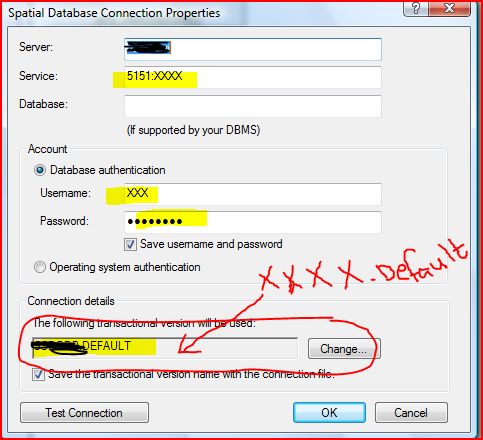
The below image shows how to connect in ArcCatalog 10.0 for  user schema geodatabase:

user schema geodatabase connection in ArcCatalog 10.0


For ArcCatalog 10.2 the connection is described in this link:

http://resources.arcgis.com/en/help/main/10.2/index.html#//002n00000031000000


ORA-01031: insufficient privileges while creating MATERIALIZED VIEW

One of the things i have found by coincidence in Oracle 11g is when you try to create a materialized view by a non-schema user (even if he has a ‘DBA‘ privilege), you will face the following error:

ERROR at line 1: ORA-01031: insufficient privileges


although the user is powerful but he could not create the materialized view under any schema (in the following example the schema name is “sico“).

SQL> CREATE MATERIALIZED VIEW sico.test_mv AS SELECT * FROM dual;
CREATE MATERIALIZED VIEW sico.test_mv AS SELECT * FROM dual
*
ERROR at line 1:
ORA-01031: insufficient privileges


you can create a materialized view using the schema owner after granting him the “create table” privilege.


check it and see !!!

I personally faced this in Oracle 11gR2.


Table was found in GDB_ObjectClasses, but does not exist in the database

Table (SICO.T_DUMMY) was found in GDB_ObjectClasses, but does not exist in the database.  Skipping.

DBMS table not found [ORA-04043: object SICO.T_DUMMY does not exist]

This “warning” message is being displayed in the log while running the “pre-requisite” upgrade option in ArcCatalog.

You can still proceed with the upgrade since it’s an “orphan issue” . Remark: warning message are displayed in “Green” color in ArcGIS Desktop.

Solution:

Through SQLPLUS or other database management tools (TOAD, Sql Developer), re-create the table using sql command.

In our example case: CREATE TABLE SICO.T_DUMMY ( OBJECTID INTEGER NOT NULL );

Then connect in ArcGIS Desktop (ArcCatalog) using the schema owner where the table is stored in (in our example schema name is “SICO”).

You will find the table T_DUMMY , then delete it. This will clean SDE metadata.

Reference Links:

http://support.esri.com/en/knowledgebase/techarticles/detail/34050

http://forums.arcgis.com/threads/72827-Clean-up-orphaned-records-in-the-SDE-repository-tables

ORA-02429: cannot drop index used for enforcement of unique/primary key

While dropping the tablespace the following error occurred:


Connected to:

Oracle Database 11g Enterprise Edition Release 11.2.0.3.0 – 64bit Production

With the Partitioning, OLAP, Data Mining and Real Application Testing options


SQL> DROP TABLESPACE TS_XXX_DATA_01 INCLUDING CONTENTS AND DATAFILES;

DROP TABLESPACE TS_XXX_DATA_01 INCLUDING CONTENTS AND DATAFILES

*

ERROR at line 1:

ORA-00604: error occurred at recursive SQL level 1

ORA-02429: cannot drop index used for enforcement of unique/primary key

  Solution:


Use the command:


DROP TABLESPACE TS_XXX_DATA_01 INCLUDING CONTENTS AND DATAFILES cascade constraints;

 If you still face issues:

Use this query to find out where are the constraint exists within your tablespace:

 select * from dba_segments where tablespace_name= ‘TS_XXX_DATA_01’;